Business Waste Removal Mayfair — Health & Safety Policy
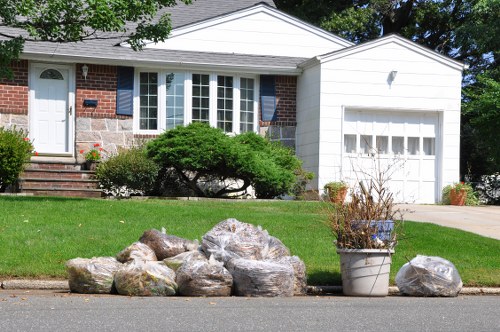 Business Waste Removal Mayfair is committed to protecting the health and safety of its employees, contractors, clients and the public while providing efficient commercial waste services. This policy outlines the standards, responsibilities and systems that support safe operations across our rubbish company service area. Our objective is to minimize risk, prevent incidents and ensure lawful, responsible waste handling at every stage of the process.
Scope: This policy applies to all business waste collection, commercial rubbish removal and on-site clearance activities carried out by or on behalf of the company. It covers routine collections, ad-hoc clearances and associated transport and disposal operations within the designated service area.
 The company will comply with all applicable health and safety legislation and relevant codes of practice. Senior management will provide leadership, allocate necessary resources and maintain documented arrangements for risk assessment, training and monitoring. Supervisors and team leaders must ensure safe systems of work are implemented and followed.
Risk assessment and control: Regular, systematic risk assessments will be undertaken for all tasks associated with rubbish removal services. Controls will include engineering measures, safe work procedures, administrative controls and the provision of appropriate personal protective equipment. Controls are prioritised to eliminate hazards where possible and otherwise to reduce risk to as low as reasonably practicable.
Responsibilities and duties
The following responsibilities ensure clarity and accountability across the waste collection service area:
- Directors — set policy, allocate resources and review performance.
- Managers — ensure implementation of safety arrangements and legal compliance.
- Supervisors — maintain safe systems of work, supervise teams and report deficiencies.
- Employees — follow instructions, take reasonable care for their own health and safety and report hazards.
- Contractors — comply with company safety standards and site-specific instructions.
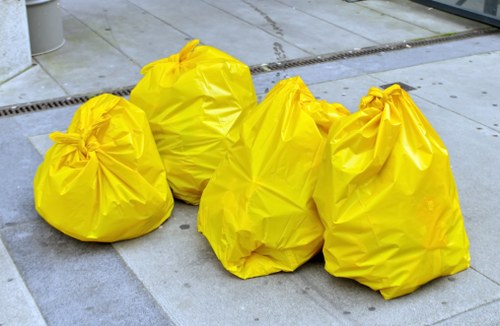 Training and competence: All staff involved in business waste removal must receive suitable induction, job-specific training and periodic refresher courses. Training covers manual handling, correct use of lifting aids and vehicles, segregation of recyclable and non-recyclable materials, recognition of hazardous waste and emergency procedures. Competence is assessed and documented; only authorised personnel are permitted to operate plant and vehicles.
PPE and equipment: Appropriate personal protective equipment such as high-visibility clothing, gloves, safety boots and eye protection will be provided and maintained. Machinery and vehicles used in rubbish removal services are subject to planned maintenance and pre-shift inspections. Equipment defects are reported immediately and removed from service until repaired.
Safe vehicle operation: Vehicles used for business waste collection and commercial rubbish removal are to be driven by authorised, licensed drivers who follow safe loading, securement and route-planning procedures. Drivers must perform pre-departure checks and adhere to hours-of-service rules to prevent fatigue. Reversing, dogging and site access arrangements are governed by site-specific risk controls.
Waste segregation and hazardous materials: Waste streams are segregated at source where possible to reduce contamination and exposure. Special procedures govern the handling, containment and transfer of hazardous wastes, including use of appropriate packaging and documentation. Where hazardous items are identified, operations are paused and specialists are engaged for safe removal.
Incident reporting, investigation and monitoring
All incidents, near misses and unsafe conditions must be reported immediately and recorded. Investigations will identify root causes and corrective actions designed to prevent recurrence. Lessons learned from investigations are communicated across the rubbish company and incorporated into training and procedures.
 Performance monitoring: The company conducts regular safety audits, toolbox talks and site inspections to evaluate compliance and the effectiveness of controls in the service area. Key performance indicators include incident rates, training completion, equipment inspection records and audit findings. Management reviews safety performance at scheduled intervals and implements improvement plans.
 Continuous improvement and review: This Health and Safety policy is a living document and will be reviewed at least annually or following significant incidents, changes in operations or regulatory updates. Improvements are driven by risk-based assessment, stakeholder feedback and industry best practice. The company is committed to fostering a safety culture where every individual understands their role in maintaining a safe working environment while delivering reliable rubbish removal services.
Conclusion: Our commitment to safe business waste removal and responsible waste management underpins every activity and decision. Through clear responsibilities, effective training, sound procedures and ongoing monitoring, we aim to protect people, property and the environment while delivering professional rubbish collection and clearance across the service area.
